
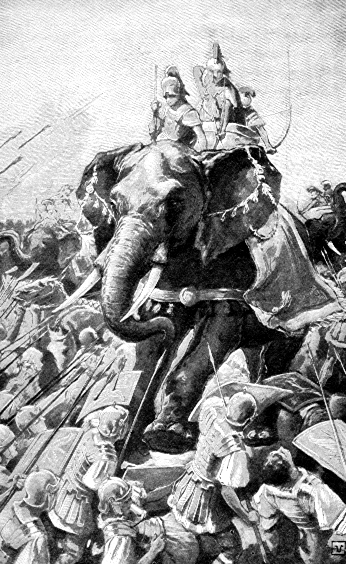
Imagine a Roman army general who sees an elephant in front of him. The Romans referred to the elephant as the Lucanian (meaning from the Luca region of Southern Italy) but didn’t have a name for an elephant and he freaks out because he has never seen one. He was not making plans on how to deal with these monstrous beasts; all he was doing was freaking out.
The Romans thought the elephant would be a great ally in battle but it turned out they had miscalculations about elephants. They were chaotic and unpredictable. If you hit an elephant it did not run toward you and attack like a stallion it panicked and ran through your lines.
The Roman general probably tried all kinds of tactics like burning pigs and oiling or disguising them with pig prototypes and lighting them on fire and sending them into the opposing army. These tricks worked through fear and Rome developed fear of elephants.
When the Romans learned elephants were becoming predictable, like charging in a straight line, they changed tactics and stopped trying to block them. They opened lanes and let elephants run through then ambushed them from the sides. It was control and courage, using geometry to avoid destruction.
Training elephants for war was not cost-effective. They took 20 years to train, consumed a tremendous amount of food, had limited grazing space, and were subject to disease. To be more efficient the Romans replaced elephants with larger faster men.
The lesson from the Romans is that the largest animal may not be the decisive factor in battle and that discipline is the most effective method for winning battles not relying on elephants.